Creating a Culture of
Peace
Peace Learning Center
teaches nonviolence and personal empowerment
|
|
|
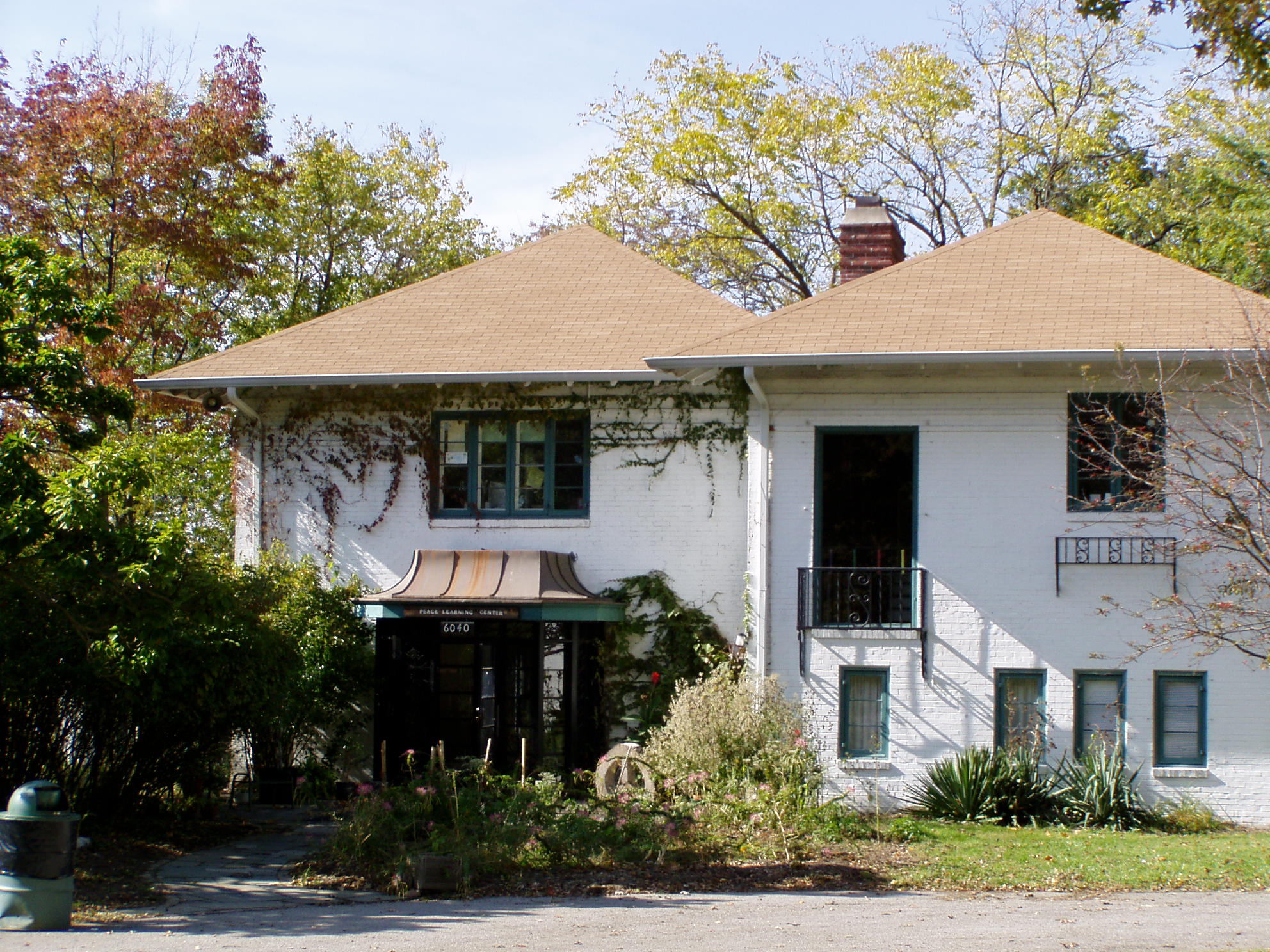
Late Summer Outside the Peace Learning Center Two friends were cross-country skiing in the woods of Eagle Creek Park in Indianapolis one winter day in 1997. As they skied, Charlie Wiles and Tim Nation talked about a conflict resolution program their local AmeriCorps group had presented earlier that day. The Indianapolis Public Schools location had been cramped and chaotic – not conducive to teaching peaceful action. When they skied past a large old home sitting empty and in decline on the banks of the reservoir, they both had the same idea. Why not use that natural setting to house the training programs? With assistance from IndyParks, Wiles and Nation obtained a lease, and together with the help of Indy Corps (a local AmeriCorps program) and Dan Stratton, founder of Safe Escape, the two men began to restore the home. Today the Peace Learning Center (PLC), a nonprofit community agency with a multifaceted set of peace and environmental programs, thrives in the mansion that was formerly J.K. Lilly Jr.’s estate. Each year since the center opened in 1997, every Indianapolis Public Schools 4th grade class has spent a full-day learning about peace and how to bring it into their lives. Students from parochial and township schools also participate. The Peace Education program focuses on helping children learn how to apply non-violent verbal and listening skills to resolve conflicts, using “I” messages, the philosophy of peace, and an interactive theater component to reinforce the concepts. Community members, including IPS administrators, teachers and students, mediation specialists, attorneys. and college professors developed the curriculum. Fourth graders were targeted because they are old enough to understand the concepts and still young enough to respond positively to praise. To date, between 20,000 – 25,000 students have learned new skills through the PLC’s Peace Education program On a typical morning during the school year buses deliver two classrooms of students at the center. Instructors lead the children on a nature hike and talk with them about how all living beings need air, water, food, and shelter. They stop to listen to nature and hear what nature has to say. Back at the center, the students break into small groups for the four-track program on conflict resolution. The first track is “Safe Escape,” a physical exercise in which they learn the art of non-engagement. The students are taught movements to put distance between themselves and danger. These skills can support them when they feel threatened. The students are taught the technique of “rephrasing.” For example if confronted by someone asserting “You stole my CD,” a child could reply, “Are you saying that your CD is missing?” |
By Karla Becker (Sat Bachan Kaur) Published in Branches July – August 2003 The goal is to be at a physically safe distance, to seek clarity, and try to engage the other person in some problem solving. The students are taught to make a quick assessment: “Is this going somewhere positive?” or “Do I need to make a safe escape? The second track is learning how to use “I-messages,” which means speaking for themselves from a personal perspective, such as, “I feel mad when you cut in front of me in line. I need you to get behind me The third track is “Peacemakers.” The children learn about four mentors: Dr. Martin Luther King Jr., Mother Teresa, Mahatma Gandhi, and Cesar Chavez. They learn that the peacemakers were real people who faced conflict in their lives too. The students discuss what these mentors mean to them and how they have influenced them, so that they can use that wisdom and apply it in their lives. The discussion centers on the question, “Why do we want to be peaceful people?” The students are taught how “We Can Work It Out” – a conflict resolution strategy that teaches them to attack the problem and not the person. At the end of the day, members of the Act Out Ensemble create an interactive theater piece to reinforce the conflict resolution skills. Children watch an improvisational skit and see the actors use the same techniques the students just learned to resolve conflict. Then the students get to act out a scenario and resolve the issue themselves. The AmeriCorps PeaceMakers program was founded as part of the Peace Learning Center and is funded through the Corporation for National and Community Service. There are five AmeriCorps Team Leaders and more than 40 AmeriCorps volunteers who assist with PLC programs. (Cutbacks in federal funding announced in June may eliminate most of those positions.) “Heading Toward Harmony,” is anchored in 12 schools throughout IPS, sponsoring coordinators, called “Harmonites,” who facilitate peer mediation, Peace Clubs, class projects, and special events within the schools, with the goal of reducing suspension rates. PLC hosts “Peace Camp,” a three-day, two-night camp for every IPS 6th grade class, teaching conflict resolution and team building skills through physical challenges at the Indiana FFA Leadership Center in Trafalgar, Ind. “Training Crew” provides conflict management training to teachers, parents, and students. Wiles and Nation would like to see the award-winning PLC evolve into a community-based center open to the public. Already the center houses “Peace Through Yoga, ” five on-going weekly yoga classes. The center may open a little tea shop, where park visitors could stop for refreshments. Whatever comes next will support PLC’s goal of creating a culture of peace. For more information or to volunteer, visit http://www.peacelearningcenter.org or contact Charlie Wiles or Tim Nation, 317/327-7144. Karla Becker (http://www.karlayoga.com ) teaches yoga for the Peace Through Yoga program at the Peace Learning Center. She is a certified yoga instructor as recognized by the Yoga Alliance. |